
Red/green TDD - Agentic Engineering Patterns
Every good model understands "red/green TDD" as a shorthand for the much longer "use test driven development, write the tests first, confirm that the tests fail before you implement the change that gets them to pass".
Example prompt:
Build a Python function to extract headers from a markdown string. Use red/green TDD.
Curator noteI've no real understanding of TTD, don't suppose I need to, but...
Added by
1 reply

Oh it's important! Otherwise you're just YOLOing code rather than actually thinking under what conditions it should 'work'.
Create AI on your BBC micro:bit using movement and machine learning
Added by
1 reply
Delighted to see this is still going!
 AI got the blame for the Iran school bombing. The truth is far more worrying (opens in new tab)
LLMs-gone-rogue dominated coverage, but had nothing to do with the targeting. Instead, it was choices made by human beings, over many years, that gave us this atrocity
The Maven interface looks like a military-skinned version of corporate project management software crossed with a mapping application. What the military analyst building the target list sees is either a map layered with intelligence data or a screen organised into columns, each representing a stage of the targeting process. Individual targets move across the columns from left to right as they progress through each stage, a format borrowed from Kanban, a "lean manufacturing" workflow system developed at Toyota, and now widely used in software development.
Curator noteLots more worry about in this article

Added by
 Why Africa needs its own AI off switch (opens in new tab)
Africa must develop AI systems with local control to protect critical infrastructure such as mobile money networks from growing AI-powered cyberthreats.

Added by
The crisis of literacy and the humanities predates smartphones and AI, argues Davies, who traces its origins to a transformation in how society understands language and learning. From the 1980s…

Added by
It's time to stop drawing user interfaces with punctuation characters. Native UI is a completely solved problem.

Added by
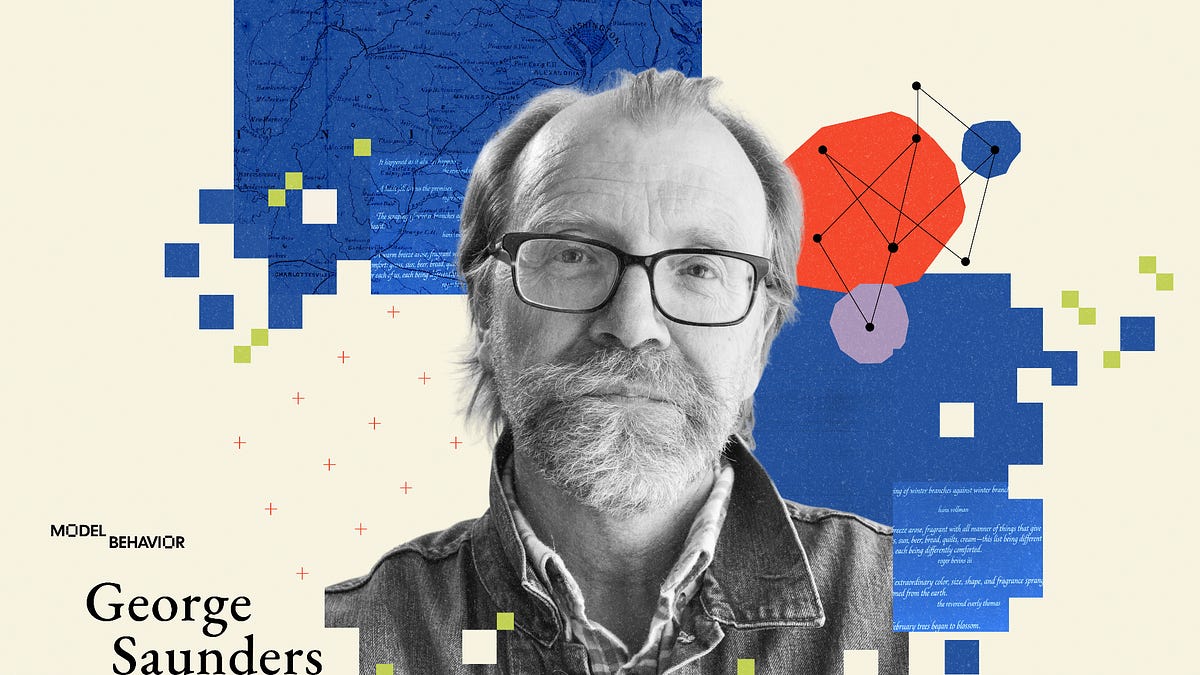
 Model Behavior: George Saunders (opens in new tab)
“Of course, if AI can cure cancer, bravo. I’m all for it. But even with cancer cured, death will still arrive somehow.”
And I think it’s harmful and dangerous to give over too easily this precious human thing called storytelling. Storytelling is something humans do, a human-to-human, highly advanced, nuanced code, a super-intelligence all our own. It doesn’t work without two humans in it. And it’s not a neutral decision, to give that up, but, like so many things these days, we seem to be doing it because . . . it can be done. (“I can make a drawing of a cat driving a snowmobile in the style of Rembrandt!” “I can make an album though I know nothing about music and can’t play an instrument!” “I can redo my resume in 10 seconds!” “I can get a first draft of my novel by giving AI a rough outline!”) But: Is it your resume? Is it your novel? Did you have a sufficient hand in it? Or did you just unwittingly sacrifice a precious chance at originality or idiosyncrasy that might have spoken, in some subtle and irreducible way, to the person reading the thing?
Also, mortality, and all the anxiety that comes with it, and that feeling of being at a beautiful party that is ending, but no one can tell us just when.
Added by
 China has cracked down on AI relationships. Is it ahead of the game? (opens in new tab)
Beijing has cracked down on AI chatbots that can replicate human relationships. Experts are asking if this is the right thing to do.

Added by
 People are reclaiming the computer (opens in new tab)
Observations from a few recent tech meetups.

Added by
We want technologies in classrooms that reward knowing things, it’s good actually
Curator note> That’s not what teachers are being shown, and of course with the current techlash moral panic1 many people are being scared away from learning it. But that’s the opportunity. To not be introducing our students to these possibilities and new ways of applying their knowledge seems to me almost c
Added by